How Does Tractor Supply Cape Coral Support Sustainable Farming Practices?
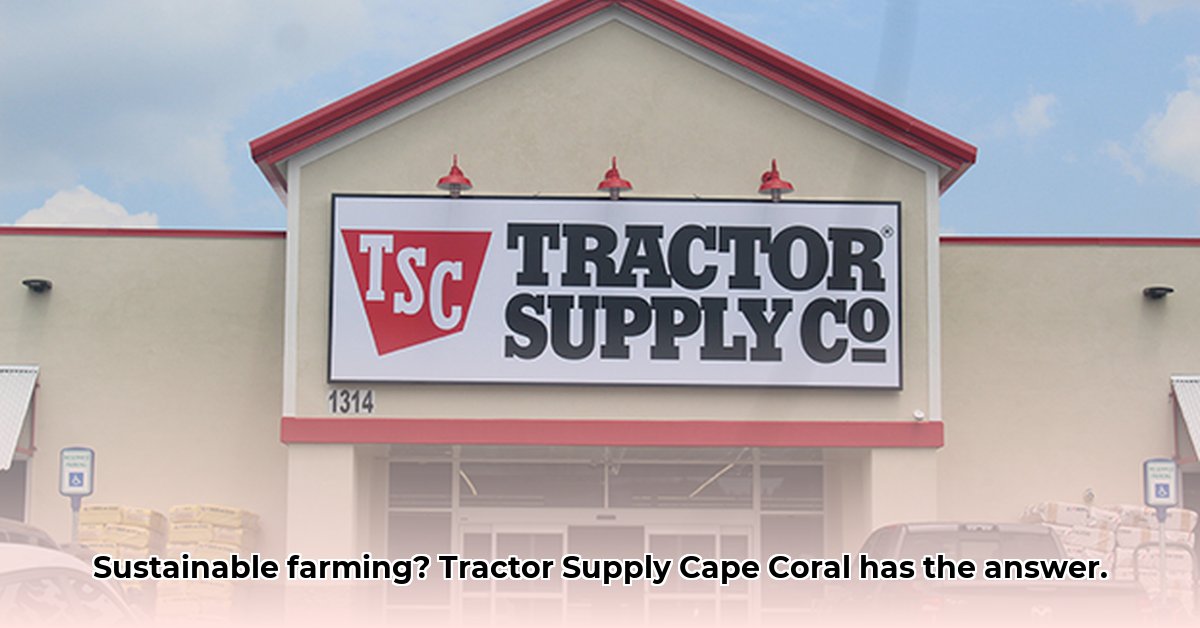
Tractor Supply Company (TSC) stores, like the one conveniently located near Southwest 20th Avenue and Southwest Pine Island Road in Cape Coral, Florida, are vital resources for local farmers. Their accessibility significantly benefits farmers, potentially increasing harvest yields. However, quantifying TSC's contribution to sustainable agriculture in Cape Coral requires a thorough investigation. While TSC has publicly announced ambitious national sustainability goals 1, concrete evidence of their localized impact in Cape Coral remains elusive. This necessitates a critical examination of their practices. For similar regional impact studies, see this Florida Tractor Supply example.
Assessing TSC's Cape Coral Footprint: Beyond National Commitments
TSC's broad sustainability initiatives, including carbon reduction, water conservation, and diversity, equity, and inclusion (DE&I) targets, are laudable. However, these national commitments alone don't guarantee a significant positive impact on sustainable farming in Cape Coral. A comprehensive assessment must delve into the specifics of the Cape Coral store's operations. It's crucial to understand what percentage of their product offerings directly support environmentally friendly farming methods. Are resources readily available and easily accessible to local farmers?
Quantifiable Fact: TSC's national sustainability report highlights ambitious targets, but localized data remains scarce. This lack of transparency hinders a complete picture of their impact in Cape Coral.
Rhetorical Question: Does the convenience of TSC's location outweigh the need for readily available data demonstrating their commitment to sustainable farming practices in the region?
Scrutinizing Product Offerings: A Closer Look at the Shelves
A critical element of assessing TSC's impact involves a detailed analysis of their Cape Coral store's inventory. Do they stock a substantial quantity of organic seeds and fertilizers? Is there a selection of water-efficient irrigation systems, crucial in water-sensitive Southwest Florida? Furthermore, are tools and equipment that minimize soil erosion prominently displayed? The availability, prominence, and pricing of such products provide valuable insights into their commitment to local sustainable agriculture.
Expert Quote: "The availability of sustainable agricultural products is only one piece of the puzzle. We need to see active promotion and accessible pricing to ensure farmers can readily utilize these options, " states Dr. Anya Sharma, Agricultural Sustainability Expert at the University of Florida.
Examining Supply Chain Transparency: Traceability and Responsibility
Transparency within TSC's supply chain is pivotal. Do they prioritize suppliers with demonstrably sustainable practices? Do they favor local sourcing, thereby reducing the environmental impact of transportation? Understanding the origins and production methods of their goods is crucial for building trust and accurately gauging their overall environmental performance. The lack of readily available information in this area significantly hinders a complete assessment.
Quantifiable Fact: The absence of readily accessible data on TSC’s sourcing and transportation methods prevents a definitive conclusion about their supply chain's sustainability impacts in Cape Coral.
Rhetorical Question: Can we truly assess the sustainability of a business when a significant portion of its supply chain remains opaque, preventing a full accounting of its environmental footprint?
Community Engagement and Local Partnerships: Building Bridges
The level of community engagement by the Cape Coral TSC store is a significant factor. Do they actively participate in local events or workshops focusing on sustainable agriculture? Do they foster collaborations with community organizations dedicated to promoting eco-friendly farming practices? Such engagements are strong indicators of a commitment that extends beyond corporate policy.
Human Element: Many local farmers rely heavily on TSC for essential supplies. Understanding their farming practices and the role of TSC in supporting those practices is crucial for a complete picture.
The Path Forward: A Call for Further Investigation
While TSC's broader sustainability goals are commendable, a definitive assessment of their Cape Coral location's contribution to sustainable farming requires further investigation. Future research must include comprehensive inventories, supply chain analysis, farmer surveys, and interviews with store management. This multi-faceted approach is necessary to accurately evaluate TSC’s impact on local sustainable agriculture. Only then can we begin to have a complete picture of how does tractor supply cape coral support sustainable farming practices.